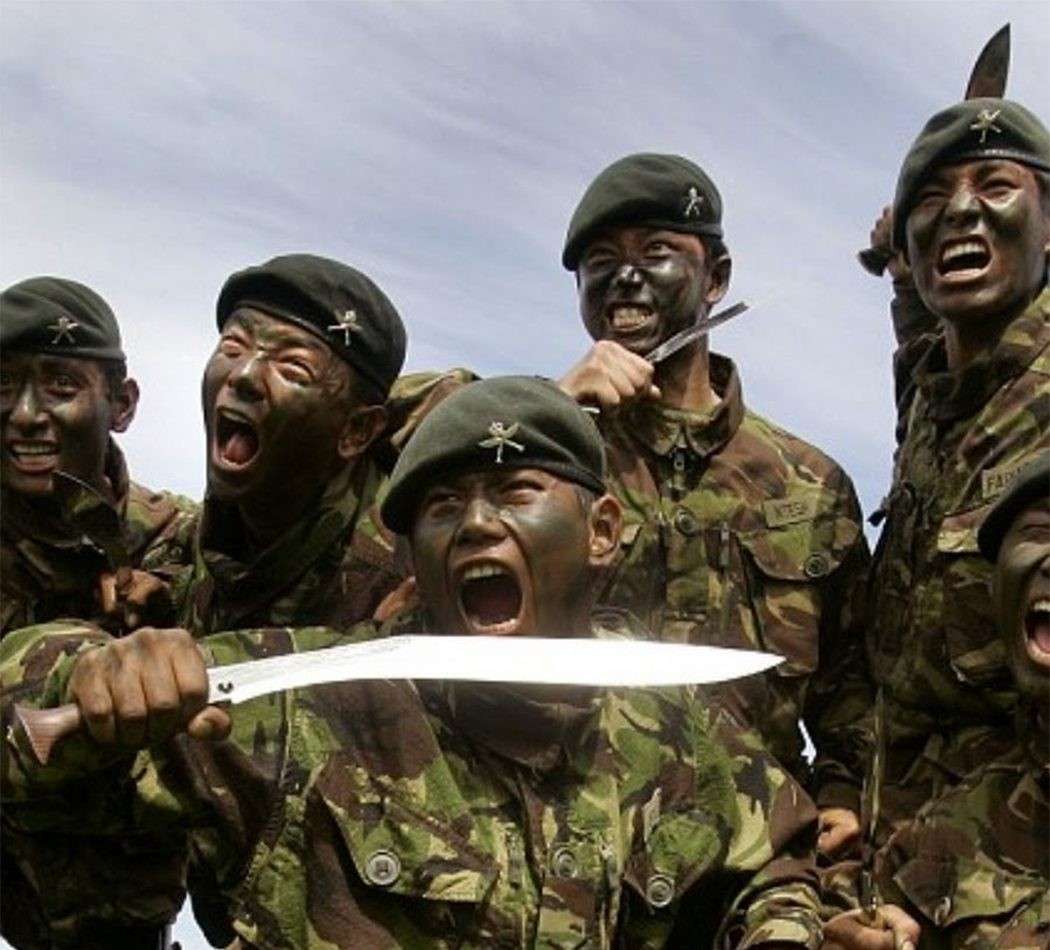
Their story began in the early 19th century during the Anglo-Nepalese War (1814–1816), where their courage and tenacity left an indelible mark on their adversaries. So impressed were the British forces by their valor that the Gurkhas were recruited into elite military units, including the British Army.
The Gurkhas are legendary warriors from Nepal, celebrated worldwide for their unmatched bravery, unwavering loyalty, and exceptional military prowess. Their story began in the early 19th century during the Anglo-Nepalese War (1814–1816), where their courage and tenacity left an indelible mark on their adversaries. So impressed were the British forces by their valor that the Gurkhas were recruited into elite military units, including the British Army. For over two centuries, the Gurkhas have epitomized honor, sacrifice, and fearlessness, steadfastly living by their creed: “Better to die than to be a coward.”

The name “Gurkha” derives from the historic town of Gorkha, the cradle of Nepal’s unification in the 18th century. At the heart of their identity lies the kukri, a curved blade as iconic as the warriors who wield it. As the saying goes, “Forged by Tradition, Honored by Warriors,” the kukri is far more than a weapon—it is a symbol of the strength, resilience, and cultural pride of the Gurkhas.
The kukri has served the Gurkhas not only in battle but also in daily life, embodying their values of practicality, courage, and loyalty. For these warriors, the kukri is an extension of their spirit, uniting their heritage with their role as protectors and fighters.
The kukri earned its legendary status on the battlefield, where it became a trusted companion in the Gurkhas’ most defining moments. During the Anglo-Nepalese War, when faced with guns, rifles, and modern weaponry, the Gurkhas relied on their kukris for close combat. Despite overwhelming odds, they wielded their blades with precision and ferocity, proving that bravery and skill could triumph over firepower.
The kukri continued to play a vital role in subsequent conflicts:
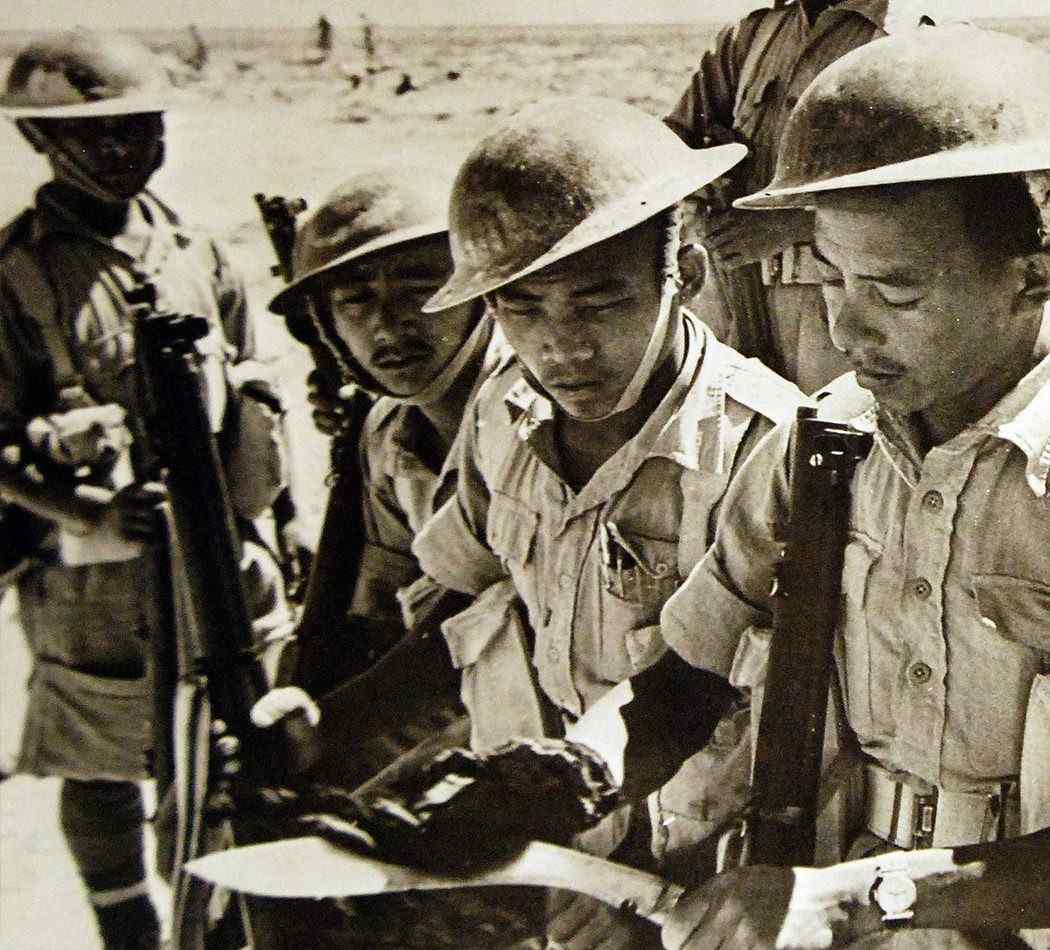
World War I and II: Gurkhas carried their traditionals kukris into the trenches of Europe and the jungles of Southeast Asia. In these grueling environments, the Gurkha kukri became their weapon of choice for close combat, often turning the tide of battles through sheer determination and tactical brilliance.
Malayan Emergency and Falklands War: In jungle warfare and rugged terrains, the kukri was indispensable. Stories of Gurkhas using their Kukri blades to clear obstacles, defend positions, and strike fear into their enemies have become the stuff of legend.
Modern Conflicts: Even in recent engagements, including British Force, Afghanistan and Iraq, the kukri remains a symbol of Gurkha resilience and adaptability, showcasing its timeless utility and cultural significance.
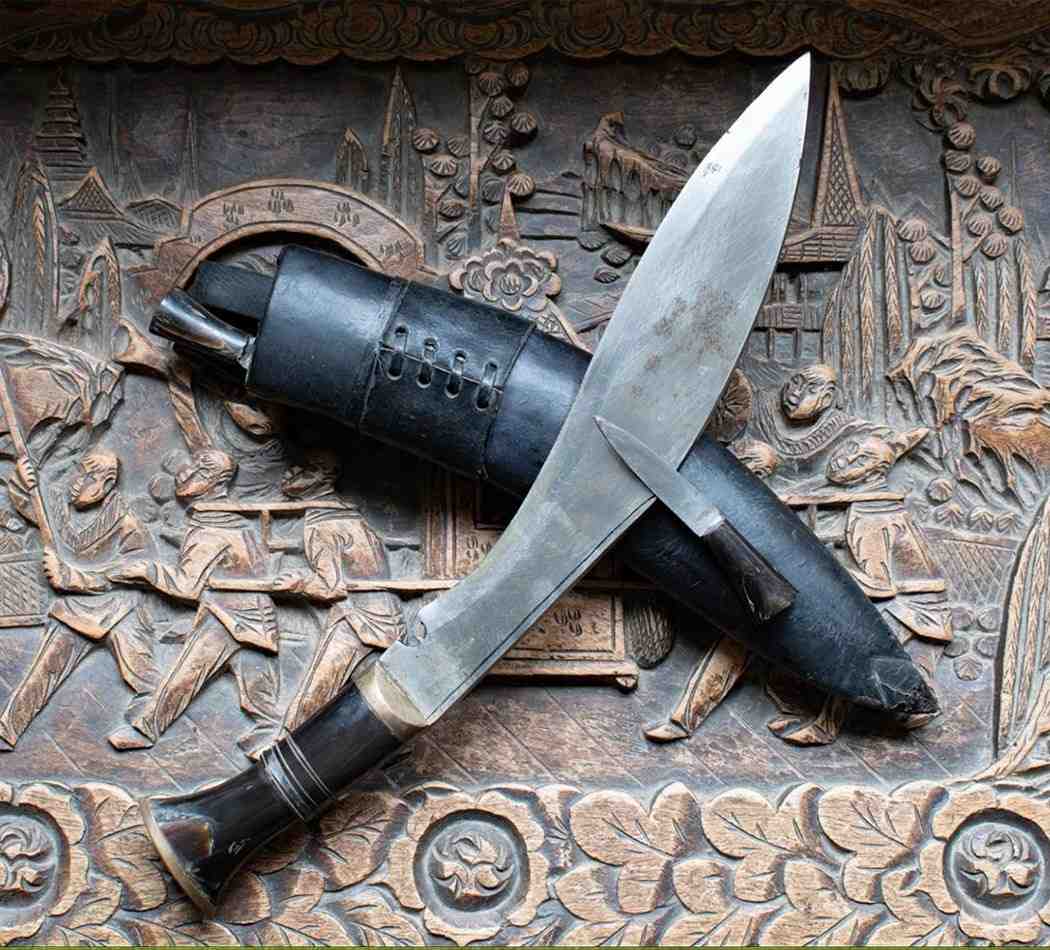
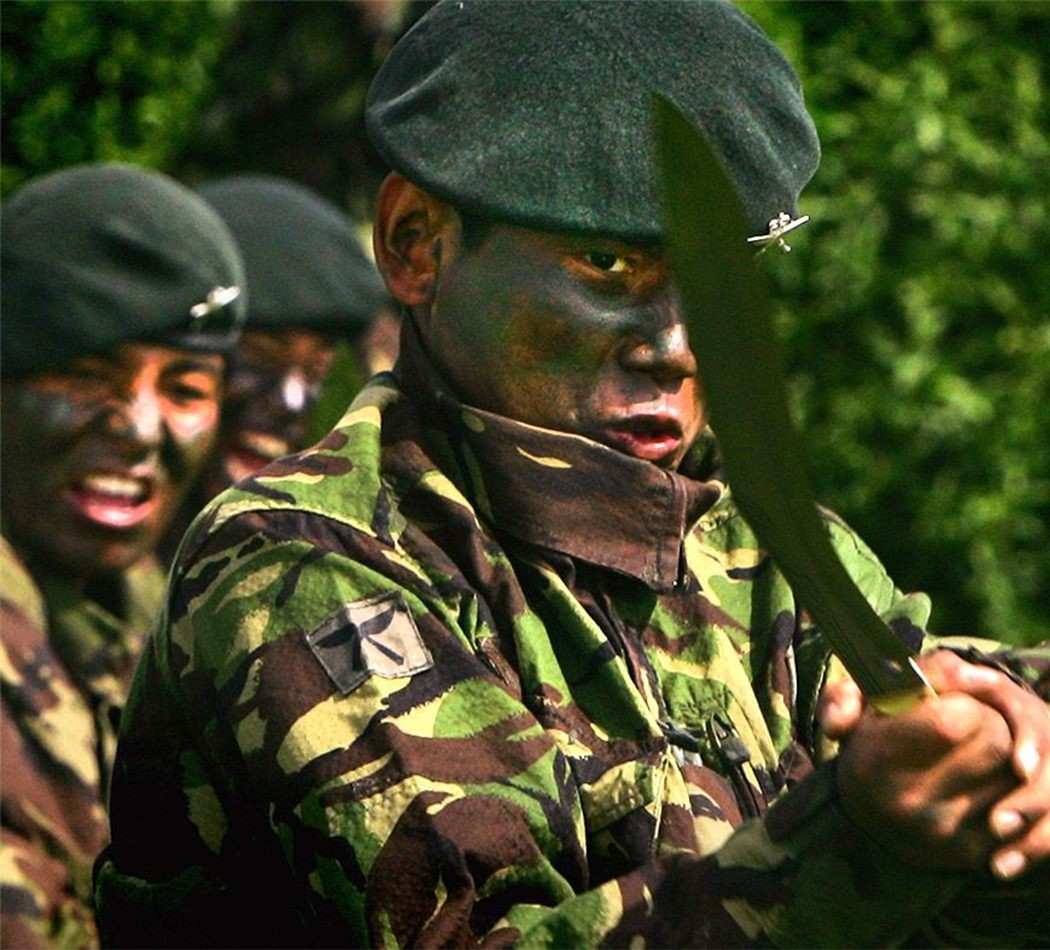
Beyond its battlefield legacy, the kukri holds deep cultural significance. It is a ceremonial object, a treasured heirloom, and a symbol of protection and pride passed down through generations. Each kukri represents “The Spirit of the Gurkhas, Embodied in Steel,” a reminder of their courage, skill, and unyielding dedication to their heritage.
To own a kukri is to hold a piece of history—a testament to the Gurkhas’ bravery and the cultural richness of Nepal. It symbolizes the warrior’s unbreakable bond with their heritage and the enduring legacy of those who have wielded it.
The Gurkhas are more than soldiers; they are a living testament to the values of courage, loyalty, and humility. Their history of facing insurmountable odds with nothing but their kukris and their indomitable spirit continues to inspire awe and respect worldwide. Whether in the heat of battle or in the hearts of those who honor their legacy, the Gurkhas remain a beacon of valor and pride.
By understanding their story, we celebrate not just a group of warriors but an enduring legacy that transcends borders and time. To carry a kukri is to carry the pride and spirit of the Gurkhas—a symbol of strength, resilience, and honor.
Beyond its historic use in battle, the kukri remains a versatile tool, serving multiple purposes across various fields. It is cherished for its utility in bush cutting, tree chopping, and clearing paths, making it an indispensable companion for outdoor activities. Additionally, the kukri finds its place in kitchens for precise cutting tasks and is admired as a decorative piece symbolizing heritage and craftsmanship. Whether for safety, practicality, or display, the kukri continues to embody the enduring spirit of the Gurkhas.